Automatic Pet Feeder: A Plain Guide for Cats and Dogs
An automatic pet feeder can dispense dry food on a schedule, but it doesn’t replace fresh water, daily checks or a person who can respond when something goes wrong. Choose by your pet’s food, meal routine and need for individual access.
On this page (6 sections)
An automatic pet feeder can dispense dry food on a schedule, but it doesn’t replace fresh water, daily checks or a person who can respond when something goes wrong. Choose by your pet’s food, meal routine and need for individual access.
A basic timed feeder can help keep meals consistent when your workday shifts. App connected models add remote controls or records, while camera models let you check the feeding area from your phone.
Use a feeder as one part of a care routine, not as a reason to leave a pet unattended for a long stretch. Start with our guide to choosing an automatic pet feeder if you already know what features you need.
What is an automatic pet feeder?
An automatic pet feeder holds food and releases a planned amount at a set time or after an action. Most hopper models in this guide dispense dry kibble, while other designs control access to an existing bowl.
A timer feeder follows a schedule stored on the unit. An app feeder connects to a phone for scheduling or alerts, and a camera feeder adds a view of the feeding area.
A microchip or tag activated feeder is different: it opens for a recognized pet rather than serving every animal that approaches. That can matter in a home where pets eat different food or need separate portions.
Which type of automatic feeder fits your pet?
Choose the feeder type that solves your main problem: predictable meal times, remote control, meal monitoring or food access for one pet. A camera or app is useful only if you’ll act on what it shows.
| Feeder type | Can help with | Check before choosing |
|---|---|---|
| Timed hopper | Serving dry food at set times | Portion size, food fit and backup behavior |
| App connected | Adjusting a schedule or checking records remotely | Wi-Fi needs and what works during an outage |
| Camera feeder | Seeing the feeding area and, on some models, talking to your pet | Camera angle, storage options and connection needs |
| Tag activated | Keeping other pets away from a designated meal | Tag fit, access and whether each pet has its own station |
| Wet food feeder | Serving food designed for scheduled access | How it keeps food safe until serving |
Some feeders combine several of these features, but each one still needs a fit check. A camera can show a bowl, for example, but it cannot guarantee that your pet ate the right amount.
For a deeper comparison of phone controls and model features, see our best automatic pet feeders guide.
How do you choose the right feeder?
Choose an automatic feeder by matching food type, portion needs, meal schedule and household setup. Don’t start with app features if the feeder cannot handle your pet’s food or keep the right animal away.
Does your pet eat dry food or wet food?
Check the food the feeder is designed to serve. Hopper dispensers are usually intended for dry kibble, and a wet food feeder needs a design made for that purpose.
Kibble shape and size can affect whether food moves through an outlet. Start with a small test portion and watch a few scheduled meals before you depend on the device.
Does your pet need measured meals?
Compare how the feeder sets portions with the amount your pet is meant to eat. A portion setting is not automatically the same as a measured serving, so verify output with the food you plan to use.
If your pet has a health condition or a prescribed diet, ask your veterinarian how to manage meals. A feeder can follow a schedule, but it can’t decide whether that plan is right.
Does more than one pet share the space?
An open bowl can’t stop another pet from taking food. If pets have different diets, consider separate stations or a model that recognizes a designated pet.
Introduce any new feeder while you’re home. Watch whether each pet can approach and eat without guarding, crowding or stealing.
Do you need remote access?
An app can make it easier to change a schedule or view feeding records when you’re away from home. It also adds setup steps and depends on the model’s connection and power arrangements.
Read our guide to whether automatic feeders are bad for cats for limits to consider before relying on one.
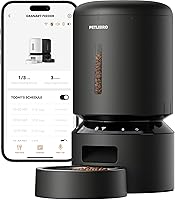
PETLIBRO Granary 5L WiFi Automatic Feeder
This model supports app scheduled meals and feeding records, with notifications for issues such as an empty tank or a jam.
PETLIBRO RFID Automatic Cat Feeder
This feeder uses a supplied collar tag to open for a designated cat, which can help separate meals in a multi-pet home.
PETLIBRO Automatic Cat Feeder With Camera
A camera, night vision and two way audio add a way to check the feeding area and speak to your pet through the app.
PETLIBRO Automatic Dog Feeder With Camera
This model combines app scheduling and camera features with a stainless steel slow feed bowl.
What should you check before relying on a feeder?
Test the feeder with your pet’s regular food and observe several meals before depending on it. Check that portions fall into the bowl, the pet can reach them and other animals can’t interfere.
Keep the unit on a stable surface, refill it before it runs low and clean food contact areas as directed. Check the bowl and outlet for food buildup, and make sure the feeder’s alerts or indicators are easy for you to notice.
Power and network behavior vary by model. Find out whether a stored schedule continues if the internet drops, whether batteries are needed for backup and how you’ll know a meal was missed.
A camera helps you see activity, but a view of the bowl does not confirm how much your pet ate. If you notice a change in appetite or behavior, contact your veterinarian rather than relying on the feeder’s records alone.
Can an automatic feeder replace a pet sitter?
No. A feeder can dispense meals, but it can’t provide a full check on your pet’s wellbeing.
Someone still needs to check food, water, the living space and the animal.
For a short absence, set up the feeder in advance and ask someone to check in. For longer travel, arrange regular in person care that can respond if the feeder jams, loses power or your pet refuses food.
Our guides explain how long a cat can be left alone at home and how long a dog can be left alone with a feeder. A feeder does not change your pet’s need for care and supervision.
What’s the simplest way to decide?
Pick a timed hopper if you need scheduled dry-food portions and a basic routine. Choose app controls if remote schedule changes or feeding records matter, and consider a camera if seeing the feeding area will help you check in.
For pets that need separate meals, focus on controlled access or separate feeding areas. Test the setup at home, keep water available and arrange a person to check on your pet when you’re away.
Frequently asked questions
What does an automatic pet feeder do?
An automatic pet feeder releases food at set times or when activated, depending on its design. Timed models suit a repeatable meal routine, while app connected models may let you adjust or check feeding remotely.
You still need to refill and clean it, confirm meals are dispensed, and provide fresh water.
Can I leave my pet alone with an automatic feeder?
An automatic feeder can support a routine during a short absence, but it cannot check your pet’s health, refill water or respond to a jam or power problem. Arrange a person to check in, especially for longer trips, pets with health needs, or a new feeder that you haven’t observed through several meals.
Are automatic feeders suitable for wet food?
Most hopper style automatic feeders are made for dry kibble, so check the food type before buying. Wet food needs a feeder designed to keep it safe until mealtime.
Don’t leave wet food sitting in a dry food dispenser or assume a timed lid keeps it fresh.
Can one automatic feeder feed two cats?
A standard feeder usually cannot control which pet eats from an open bowl. If your cats need different diets or portions, look for a feeder with pet recognition or separate feeding stations, and supervise meals until you know each cat can reach the right food.
Do app connected automatic feeders need Wi-Fi?
App features such as remote scheduling, feeding records and alerts generally depend on a network connection. Some feeders may continue a stored schedule during an outage, but backup behavior varies by model.
Check the instructions for what happens when Wi-Fi or household power stops.